How to Choose a Custom Living Room Rug Color
Choose a living room rug color by working from the sofa, floor and light you already have, then test samples at different times of day.
Choose the rug color after the sofa, the floor and the walls are settled. The rug sits between all three, and once you know what it has to work with, it is the easiest piece in the room to get exactly right.
A made-to-order rug gives you the full range of color to work with, which is a gift and a risk. These are the steps we follow with clients.
Start with the surfaces you cannot change
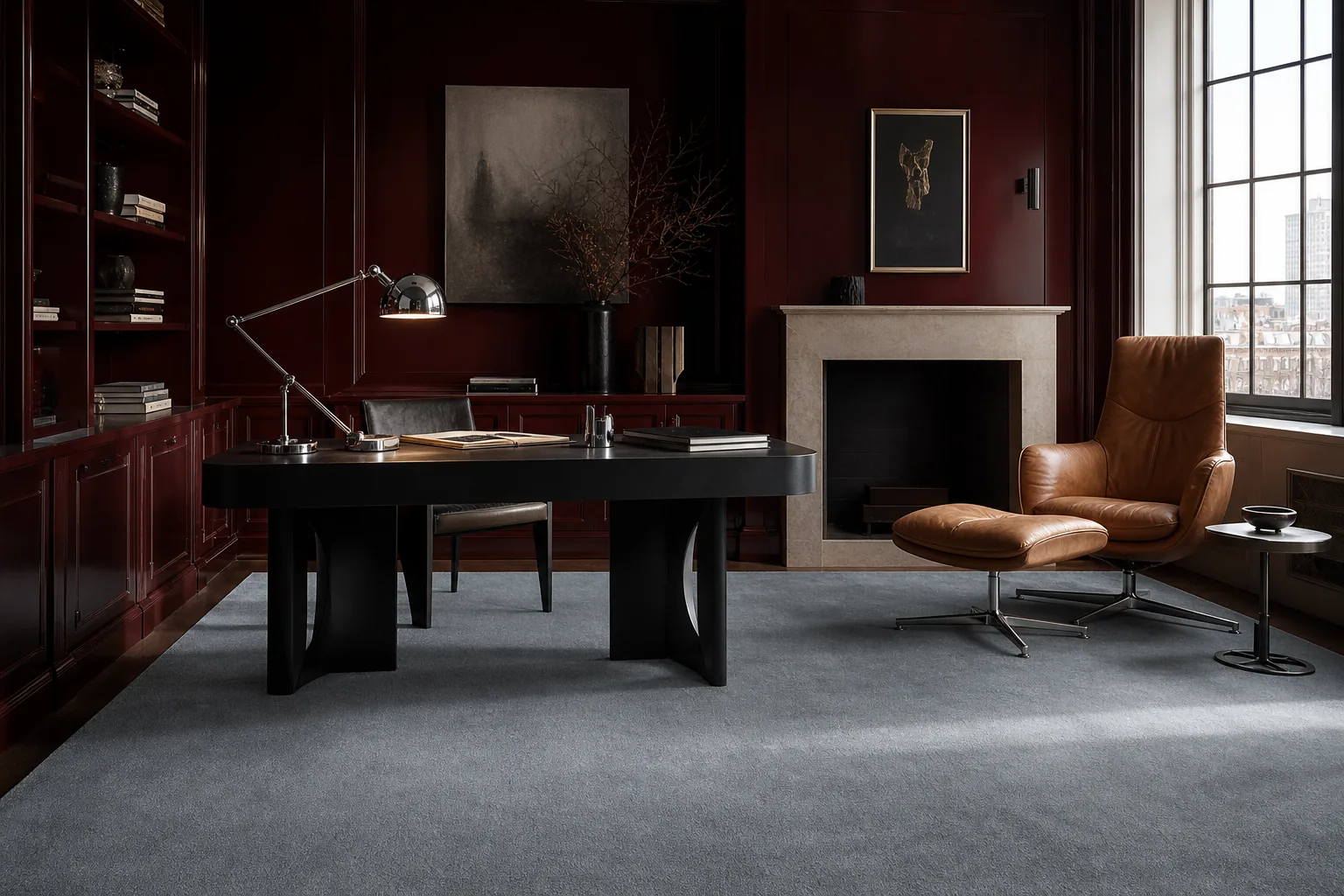
List what is fixed: the wood or stone floor, the sofa fabric, any large piece of art, the fireplace surround. Those set the range. A rug a clear step lighter or darker than the floor reads as its own surface. One that matches the floor closely tends to disappear, which can be the right call in a small room.
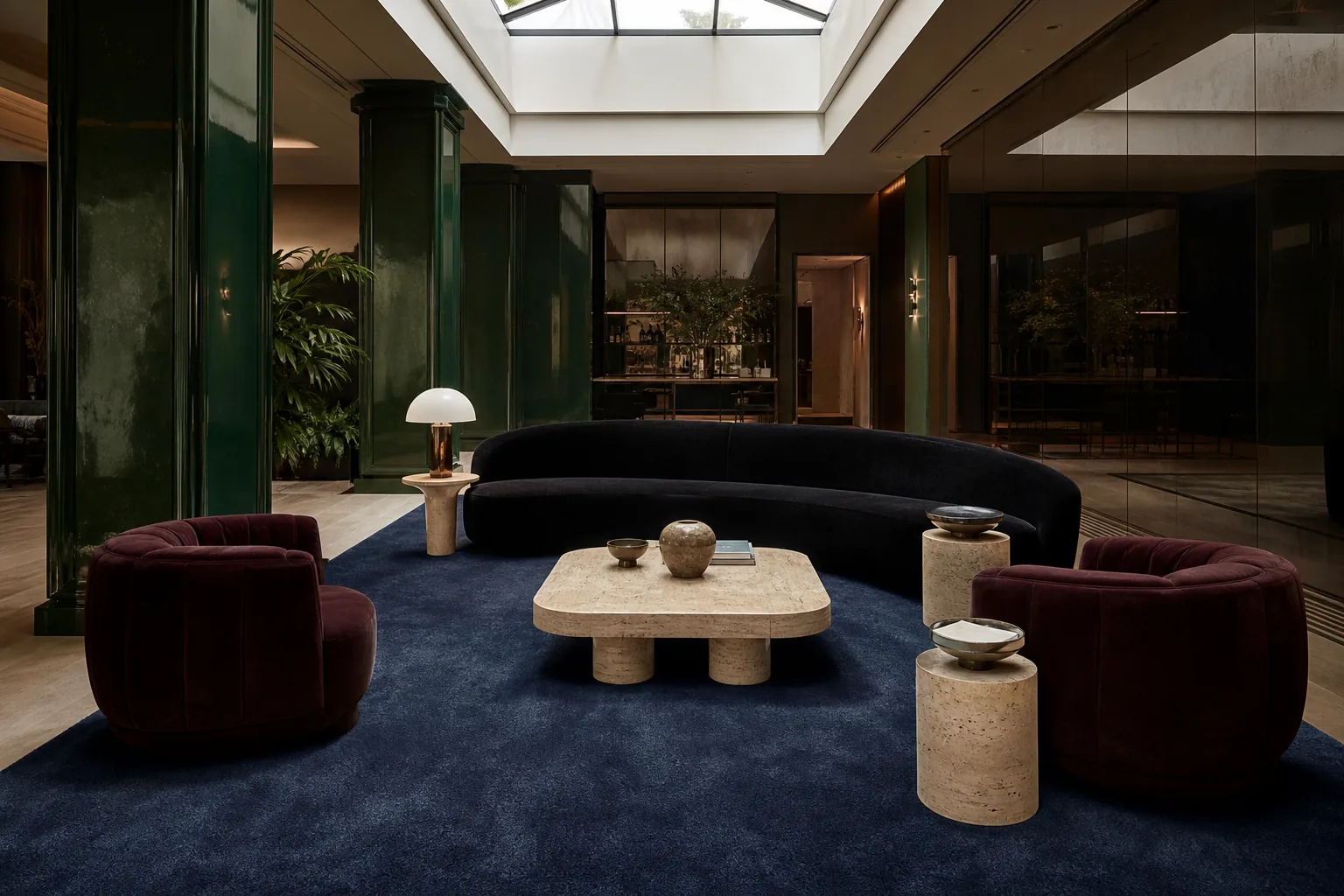
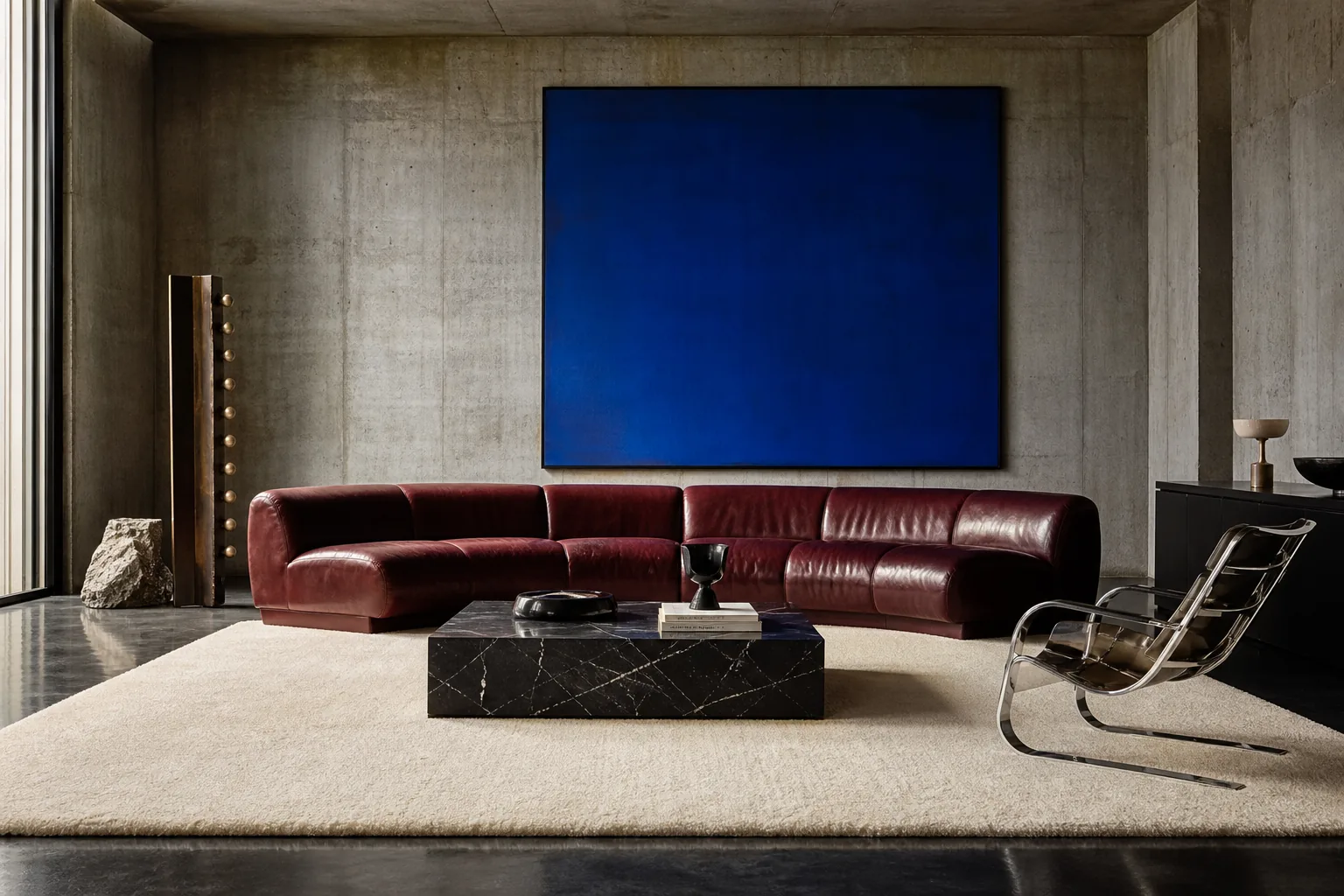
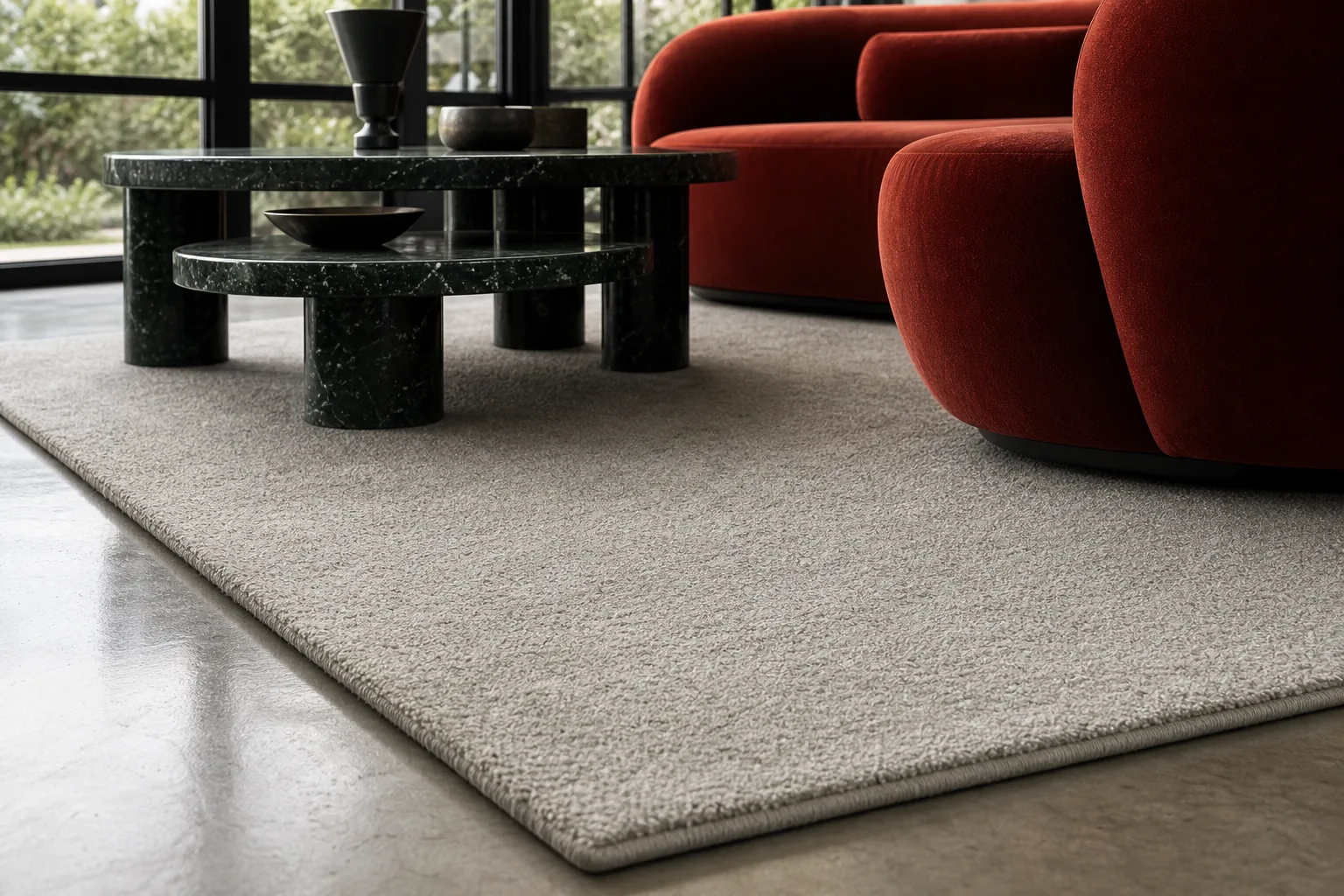
Then decide on contrast with the sofa. A pale sofa on a deep rug, such as Oud or Midnight Blue, looks crisp and defined. A pale sofa on a pale rug, say Oyster under linen, looks soft and continuous. Both work. The trouble starts halfway between, with a beige sofa on a slightly different beige, where neither piece looks chosen.
Read the light in the room
Daylight changes a rug more than most people expect, and the direction of the windows tells you a lot.
- North light is cool and even. It mutes warm colors and makes blues and greens look deeper.
- South light is warm and strong. Saturated colors look vivid, and pale colors can look washed out at midday.
- East and west light swing through the day, bright and warm at one end, flat at the other.
- Warm lamps at night pull everything toward yellow, so cool blues and grays lose some clarity. If you use the room mostly in the evening, judge color by lamplight.
Neutral or saturated
A neutral rug still takes a position. Chalk, Oyster, Cashmere and Almond each lean a different way, and you will see it the moment you lay the samples side by side. Hold them against your wall paint and pick the one whose undertone agrees with it.
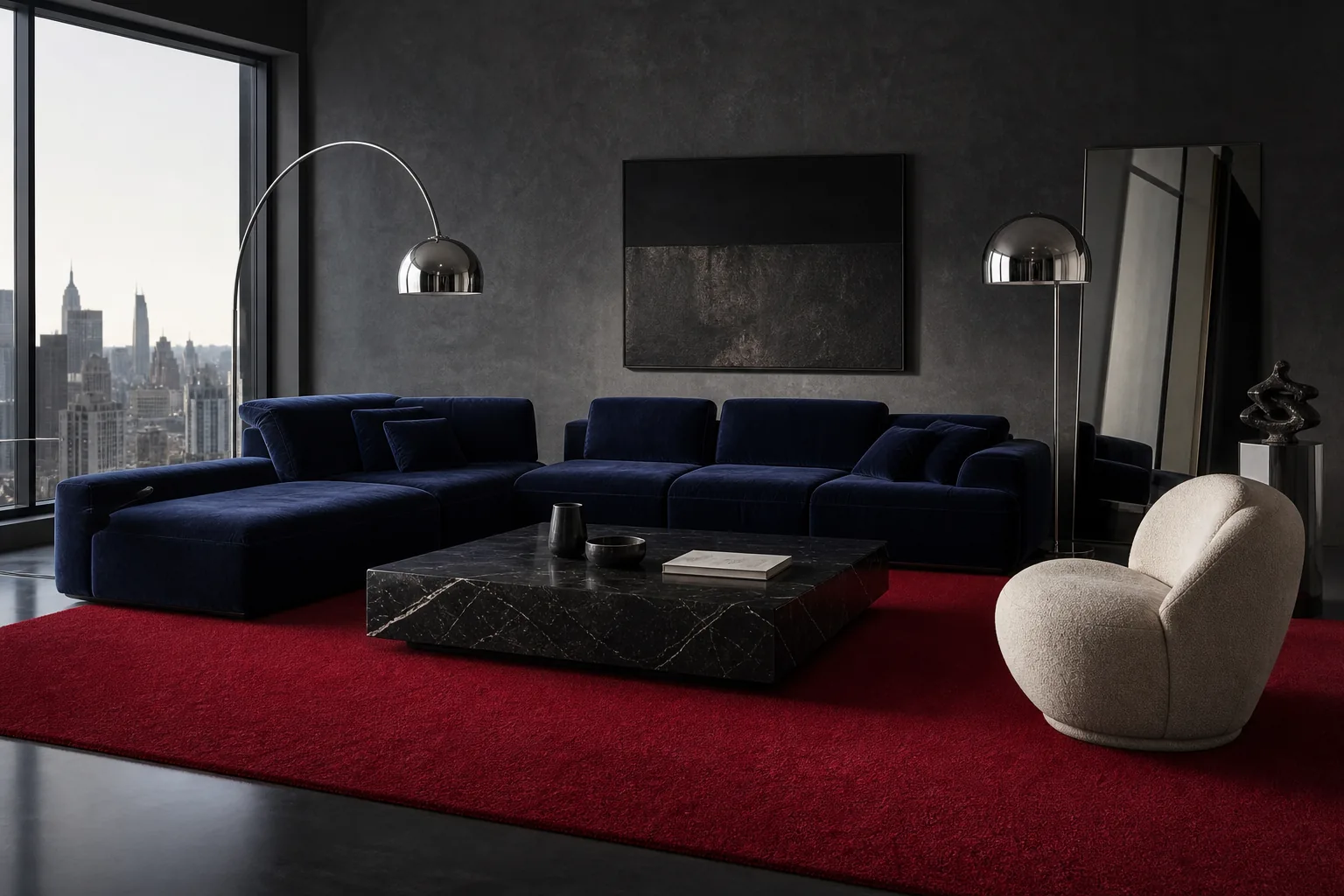
A saturated rug changes the room more. In our Intense collection, every rug is one strong color across the whole field. Olive and Saddle sit easily with wood and leather. Ruby and Brick bring warmth to a gray or white room. Lapis gives a modern room a clear graphic floor. Saturated rugs work best when the upholstery is calmer, so the color has space to carry.
When a border solves the problem
Sometimes a living room needs two colors: one to sit with the sofa and one to pick up the walls or the art. The Thick collection puts a calm center inside a broad border, in pairings such as Jet / Cashmere, Moss / Almond and Oud / Horizon. A border also frames the seating group, which helps in an open plan where the living area has no walls of its own.
Size matters more with a border. Plan for the front legs of the sofa and chairs to sit inside the border line, with about 18 inches of floor showing around the rug, so the frame reads cleanly from the doorway.
What to check on a sample
- Put it on the floor in the middle of where the rug will go.
- Look at it from the sofa and from the doorway. A full rug reads stronger than a small swatch, so if you are between two shades, the lighter one usually lands closer to what you pictured.
- Check it in the morning, the afternoon and at night.
- Hold it beside the sofa fabric, a floor board and a paint chip at the same time.
- Turn it around. Cut pile looks slightly darker from one direction, and the full rug will do the same.
Our larger color book in the MAJLIS Studio adds Core, Soft and Bright ranges beyond the collection colorways, and you can see each one on a rug drawn to your room's size. For other rooms, our guide to rug colors by room picks up from here. When you have two or three favorites, request samples and live with them for a week.