The Thanksgiving Buffet: Serving Stations, Traffic Flow and the Floor
How to set up a Thanksgiving buffet at home: where to put each station, how much space guests need, and how to plan the floor for a full house.
Thanksgiving falls on Thursday, November 26 this year. Once the guest list passes ten or twelve, a seated, passed-plate dinner gets hard to manage, and many hosts switch to a buffet. It is a generous way to feed a crowd: people choose what they like, go back for seconds without asking, and the host gets to sit down too.
A buffet only feels relaxed when the line moves. That comes down to where you put things, how much room people have to stand and turn, and what is underfoot along the way. Here is how we plan it.
Start with the route, not the table
Before you set out a single dish, walk the path a guest will take: from the living room to the food, along the line, and back to a seat with a full plate in one hand and a glass in the other. Every problem shows up on that walk: a chair in the way, a rug edge that catches a toe, a corner where two people cannot pass.
A few numbers help:
- Along the line: leave at least 36 inches between the edge of the buffet and the nearest wall or furniture, so one person can serve while another passes behind. If you can give it 42 to 48 inches, the line feels unhurried.
- Main walkways: about 36 inches for the paths people use most, and never less than 30 inches anywhere someone will carry a plate.
- Table length: plan on roughly 24 inches of tabletop per main dish, plus space for trivets and serving spoons. A 72 inch table comfortably holds four or five large dishes on one side.
If your room allows it, pull the buffet table a few feet away from the wall. Guests can then serve from both sides, which roughly halves the wait for a group of twenty.
Set the stations in the order people eat
The most common buffet mistake is putting everything on one surface. Split the meal into stations, each with its own job, and spread them through the space so people are not all standing in one spot.
The main line
Plates go first, at the start of the line. Then the turkey or main dish, then the sides, with gravy and cranberry sauce next to whatever they belong with. Put rolls and butter near the end. Flatware and napkins go last, ideally wrapped together, so guests are not juggling a fork while they spoon stuffing. Label anything with nuts, dairy or gluten with a small card.
The drinks station
Move drinks well away from the food, on a sideboard, a kitchen counter or a small table near the living room. This one change does more for traffic than anything else, because it splits the crowd in two. Keep the drinks station on a hard floor if you can, with a tray beneath the bottles and a cloth close by.
The dessert table
Pies, coffee and tea can wait in the kitchen until the main course is cleared, then come out on their own surface. A separate dessert station gives the evening a second act.
A landing spot for empty plates
Set out a bus tub or a tray on a side table between the seating and the kitchen. Guests will use it.
Host's tip: do a dry run the night before. Set out the empty serving dishes with a sticky note on each naming what goes in it, then walk the line yourself with a plate. You will find the tight corner while there is still time to move a chair.
Plan the floor for a full house
A buffet asks more of the floor than a seated dinner. Instead of a dozen people sitting still, you have a dozen people walking back and forth with gravy, wine and pie. Think about the floor in three zones.
Under the line
Where you can, set the main buffet on a hard floor, or at least keep the serving edge off a pale rug. If the buffet has to sit in a carpeted room, a rug with a dense, low pile handles the traffic best: our standard 14 mm pile, just over half an inch, keeps crumbs near the surface and lets people turn without their feet catching.
The seating area
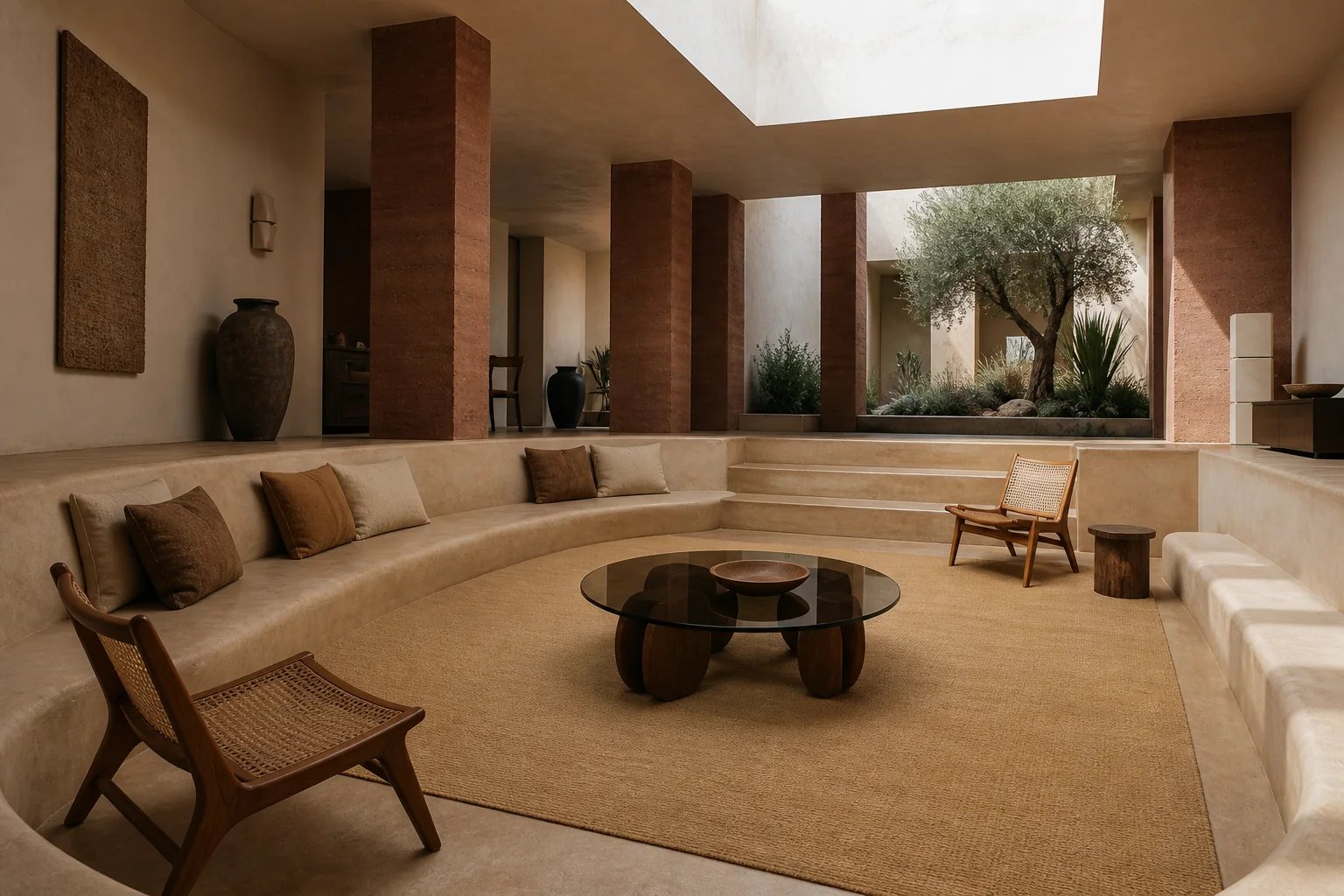
This is where most of the eating happens, often with plates on laps and glasses on low tables. Keep a side table or a stool within reach of every seat, about 14 to 18 inches from the sofa for the coffee table, so food lands on a surface rather than the floor. The rug here should be large enough that all the front legs of the seating rest on it. A rug that floats in the middle of the room creates edges for people to trip over on their way back for seconds. Our guide to choosing the right rug size covers the measurements.
The path between them
The strip between the food and the seating gets walked dozens of times on Thursday. If it crosses a rug, make sure the rug lies flat, with a good pad and no curled corners, and that its edge does not fall right where people turn.
Why fiber matters on the busiest day of the year
Every MAJLIS rug is made in New Zealand wool or in ECONYL® regenerated nylon. Wool is soft and matte, and it is still our first suggestion for a bedroom or a quieter formal room. For the rooms that do the hosting, we usually point people to ECONYL®.
ECONYL® is nylon regenerated from waste such as old fishing nets and fabric scraps. Once spun, it behaves like conventional nylon, which has long been a standard in hotels and offices because it is so resilient. It recovers after foot traffic, holds deep color well and cleans up more easily than most natural fibers. For a room full of people carrying plates, those are the qualities that count. Our piece Are ECONYL® Rugs Durable? goes into more detail.
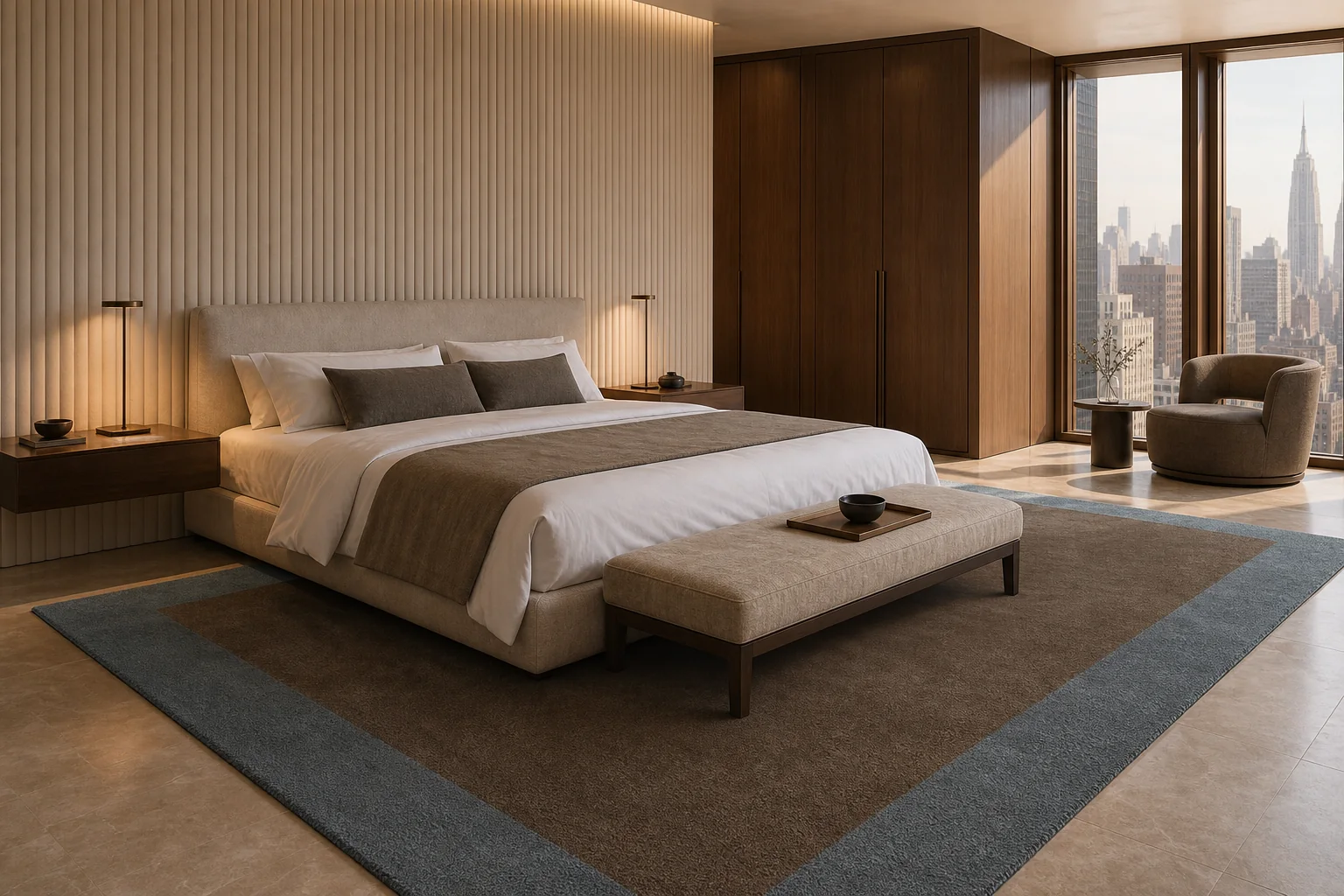
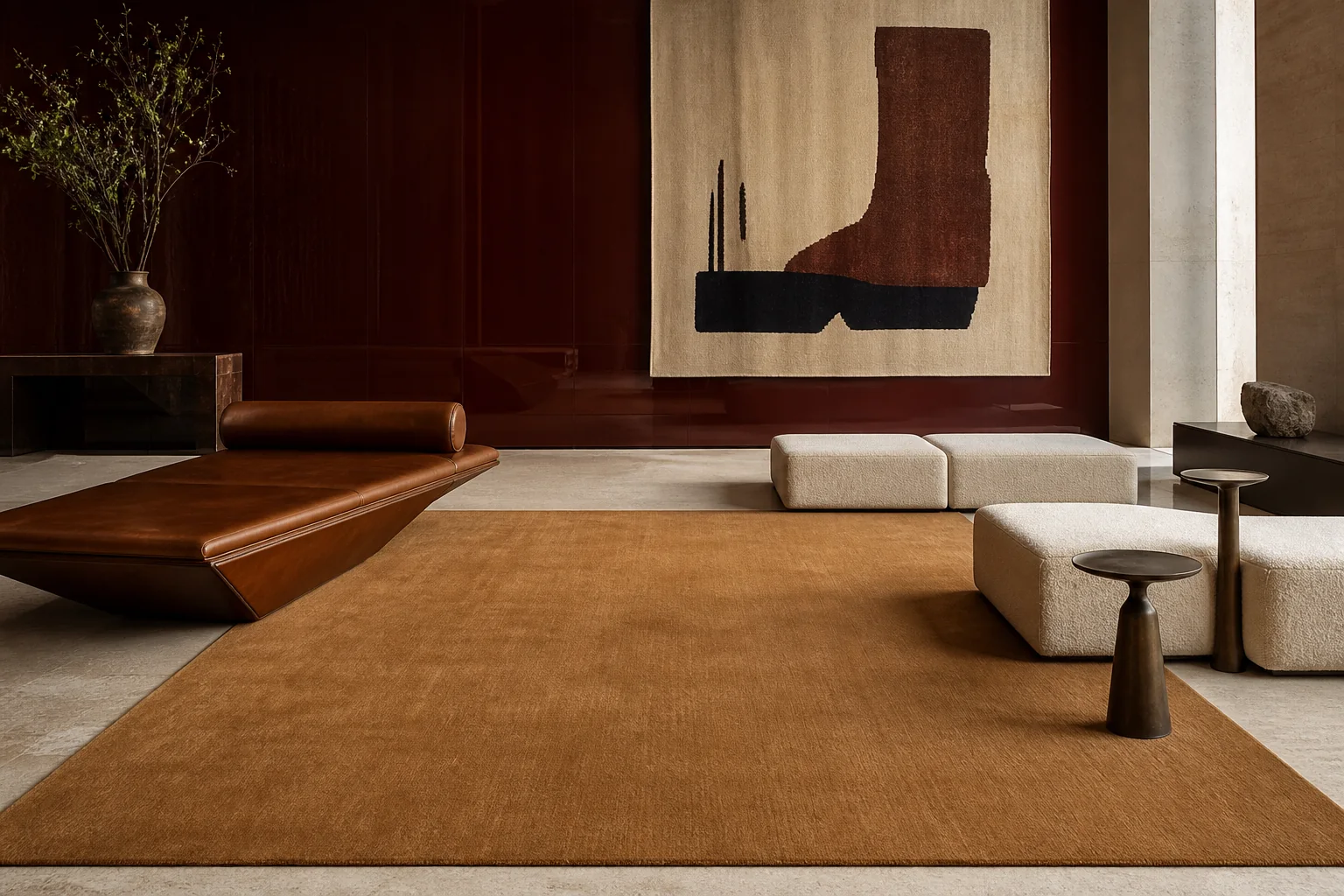
Color does the rest. A mid to deep tone with some warmth, such as Biscuit, Saddle or Oud from the Intense collection, forgives far more than a very pale rug. If you love a lighter center, Thick in Fieldstone and Biscuit puts the deeper color in the border, where feet and chair legs land most.
Before the holiday
Every MAJLIS rug is made to order, and most mainland United States orders arrive in roughly 8 to 10 weeks. A rug ordered now will arrive after this Thanksgiving, so treat it as a decision for the year of gatherings ahead. For this year, a clear route and well placed stations will carry the day.
When you are ready, browse Intense and Thick, size a rug to your room in the MAJLIS Studio, or ask us for samples of ECONYL® and wool to compare in your own light.
Designed with love in New York.